
(CASE STUDY)
Bubble Blasters
Built end to end, then measured.
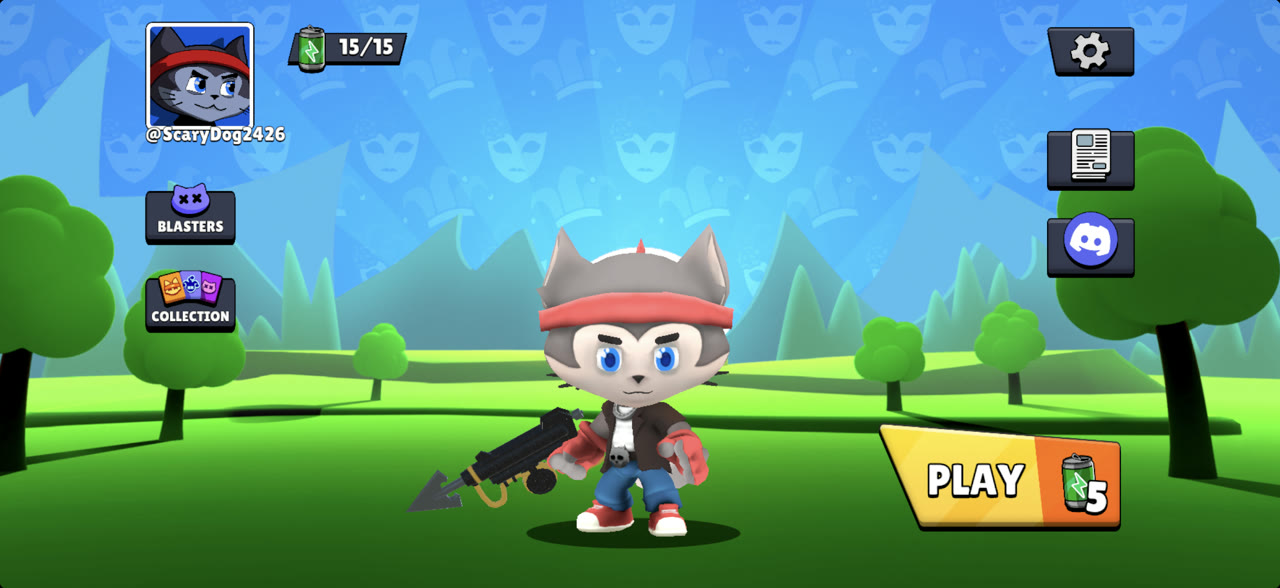
Bubble Blasters is ours. Not published by us, not co-developed — built here, all of it. What follows is the whole arc: how it was made, and what we did once it was live.
Everything In-House
The characters, and the environments they move through. Every 3D asset. The sound. The gameplay code, the progression system, the save system, and the backend that holds it all together. When a bubble pops the way it should, that timing was tuned by the same team that wrote the server it reports to.
That matters more than it sounds. When one studio owns the art, the code and the backend, there is no negotiation about whose problem a bug is, and no waiting on a vendor to unblock a milestone. We built Bubble Blasters this way because it is how we prefer to work — and it is what we offer partners.
Reading The Game
Shipping it was the halfway point.
Once the game was live we instrumented it and started reading what players actually did, rather than what we had assumed they would do. Event pipelines feeding an analysis loop: where players stopped, where they hesitated, which parts of the progression carried them forward and which quietly lost them.
Design opinions are cheap before launch. After launch they are testable. We changed the game based on what the data said rather than on what we had originally intended, which is a harder habit than it sounds when the thing you are being told to change is your own.
Attribution
Analytics tells you what players do once they arrive. It cannot tell you where they came from, or whether the people you paid to reach are the ones who stayed.
So we implemented attribution with AppsFlyer and connected acquisition to behaviour. From that point a player was not just a session — they were a session with an origin, and every downstream number could be read back to the thing that produced it.
Paid Acquisition
With attribution in place we ran campaigns on Meta Ads — deliberately, to learn.
Which audiences actually perform once they are inside the game, rather than which are cheapest to reach? And which creative earns its spend, rather than which one we liked? Both have obvious-sounding answers that turn out to be wrong often enough to be worth paying to find out.
The point was never volume. It was knowing which levers respond before committing a budget to pulling them.
Soft Launch As A Phase
All of it — the instrumentation, the attribution, the campaigns, and the changes they drove — happened during soft launch. That was the plan.
Soft launch is not a small launch. It is the phase where a game stops being a set of assumptions and becomes a measured thing, while the cost of being wrong is still low. A studio that treats it as a milestone gets a launch date. A studio that treats it as an instrument gets a game that has already been corrected once, before anyone spends real money on it.
That is the phase we are best at, and the one most often skipped.
Want this run on your game? Get in touch.